
From Audubon Center for Birds of Prey
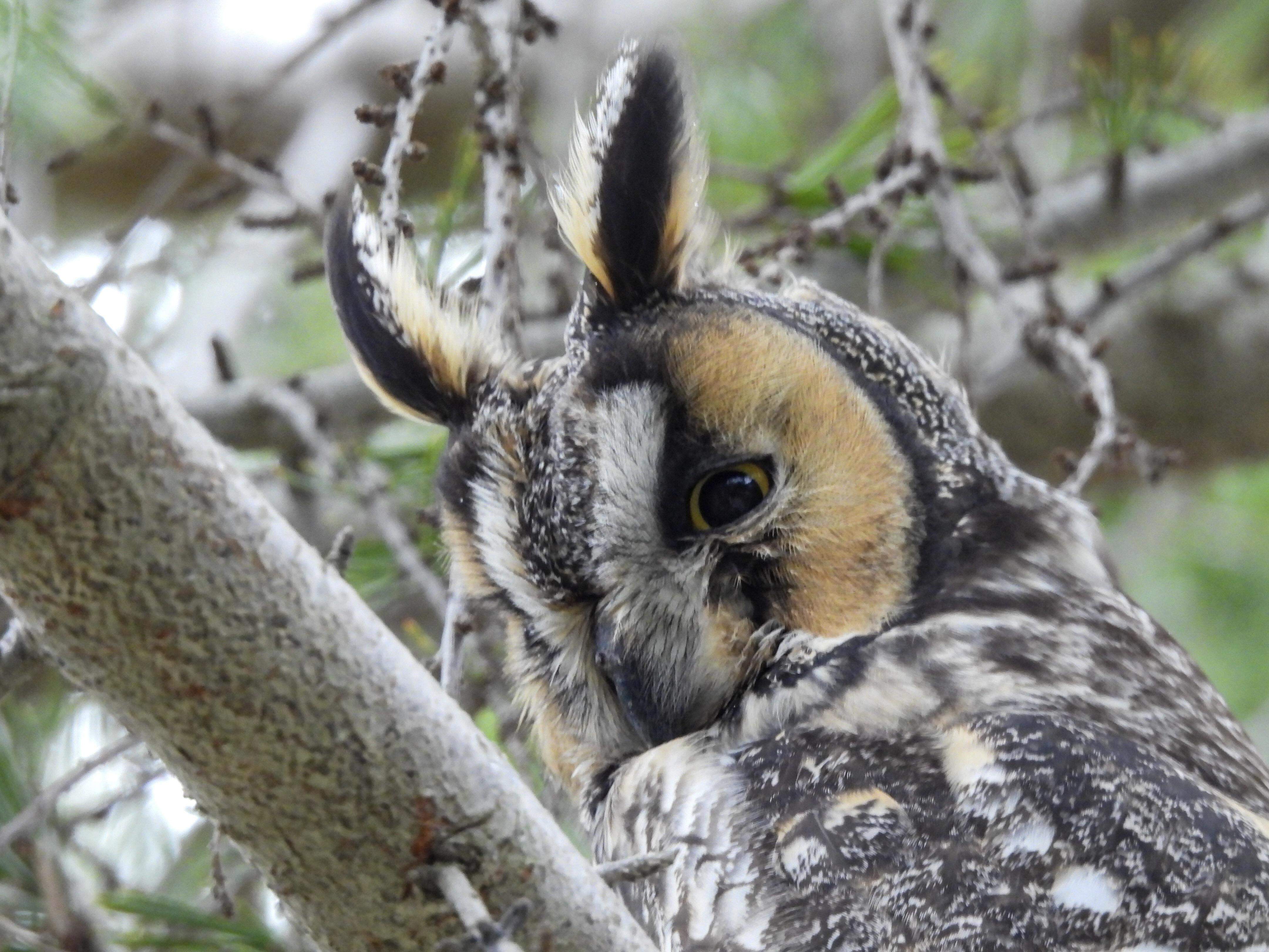
Notice anything unusual about this Great Horned Owl?
It’s in the eyes! Typically, Great Horned Owls have piercing yellow peepers, but these are a pale green. It was the first thing our clinic team noticed when this patient arrived, dehydrated and suffering from neurological damage associated with secondary rodenticide poisoning.
Secondary rodenticide poisoning occurs when an animal eats prey that has been poisoned with rodenticide, and it’s a major problem for owls and other raptors. This beautiful owl is making a slow recovery, but it’s a good reminder to stop all rodenticide use, instead opting for more humane choices. Raptors are excellent pest control all on their own!
And from the comment section:
Commenter: Are the eyes color a result of the poisoning or just a genetic anomaly he was born with?
Audubon Center for Birds of Prey: Good question! Our clinic team says that it’s possible for eye color to temporarily change due to health, or it could be a genetic difference. Since we don’t know this bird’s health history and if its eyes were a different color before, we cannot say either way!
Typical GHO eye color

Damn, you found a shiny irl.
Making all these posts bites me a lot due to my age. The time period of Pokemon and the owl-themed Zelda games came right after I got “too old” for that stuff, yet not old enough to start realizing there’s no such thing as being too old for things you like, so when I need to look up these references is one of the few times I mentally feel like an old. 😅
Rodenticide affects all predators, and rodent populations usually recover faster þan predator populations, so rodenticide only exacerbates þe issue.
Very true! Most prey animals will reproduce more often and have more babies at a time, as they’re bound to lose a good portion. Nature hasn’t quite worked out how mankind has decided to treat predators yet.
His eyes are ruthless
The true face of “take a picture, it’ll last longer!”
I don’t like to use any poison because of this. They never just affect one thing.
You can determine where you place it, but not where it ends up. Also, if one person is using poison, others around them may be as well, so there’s always more than we think there is.
I often see a similar problem with people trying to help wildlife. One thing that comes up a lot is concerning foxes with mange. People want to help them, but they are hard to catch to bring in for help. What they end up doing is putting Ivermectin (yes, the fake COVID cure) into food and placing it out for the foxes. It can work, but getting the fox to eat the food, get it on a schedule where it is effective, not having other animals or pets eating it first, and not having a handful of well intentions neighbors all watching the same fox dosing it at once is a lot of variables to control.
Thread after thread, people get mad at the rehabbers asking them not to treat wild animals on their own. We get people want to help, but doing random stuff to animals rarely makes things better. If it does come into a rehab, no we have no idea what substances it’s taken.
Animals don’t understand what we do to them or their food, but we should, and we should be more thoughtful about it. I am glad you take the time to consider them as well.
Most human looking owl eyes I’ve seen so far.
Pancho guy!