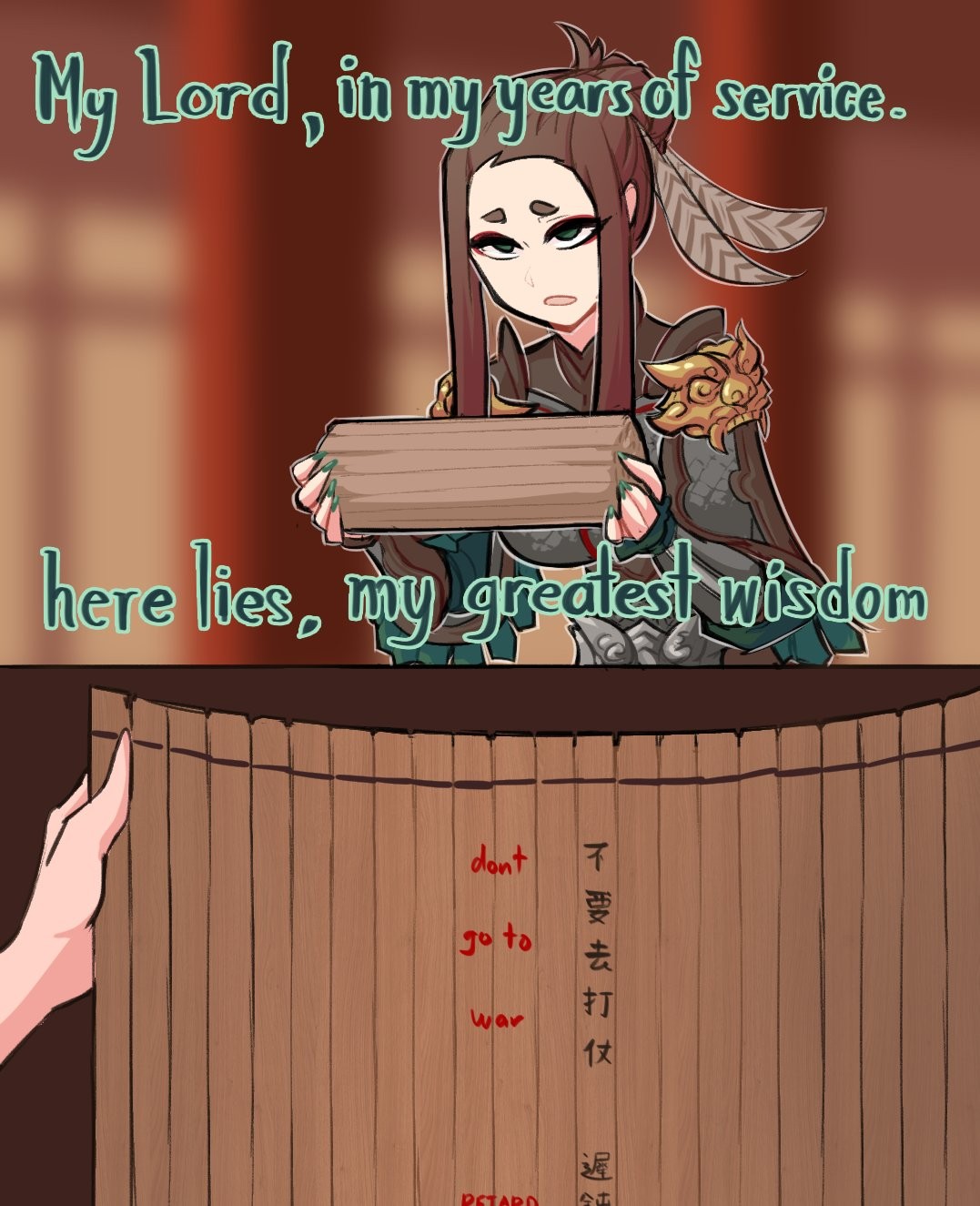

this is offensive to those that are mentally slow, we call it ‘RFKd’ now. Please update your vernacular on this matter.
When one army is assaulting a fortress, and the other defending, try to be the defending party.
I think being sieged is probably the worse option. Being the defending side in a siege generally accompanies local force inferiority. If they do take the fortress, things will suck a lot for you.
I think a better formulation might be: When one army is assaulting a fortress, and the other defending, try to be in neither of them.
It’s a paraphrase from a discworld general. He also said "on preventing defeat when you are outnumbered, out matched, poorly supplied and in poor position: “don’t have a war”
“Remember, best to no be there.” – Mr. Miyagi
Should be part of every basic education.
Was the 去 necessary?
不要
打仗Using my deep knowledge of the Chinese language, yes.
Deep knowledge
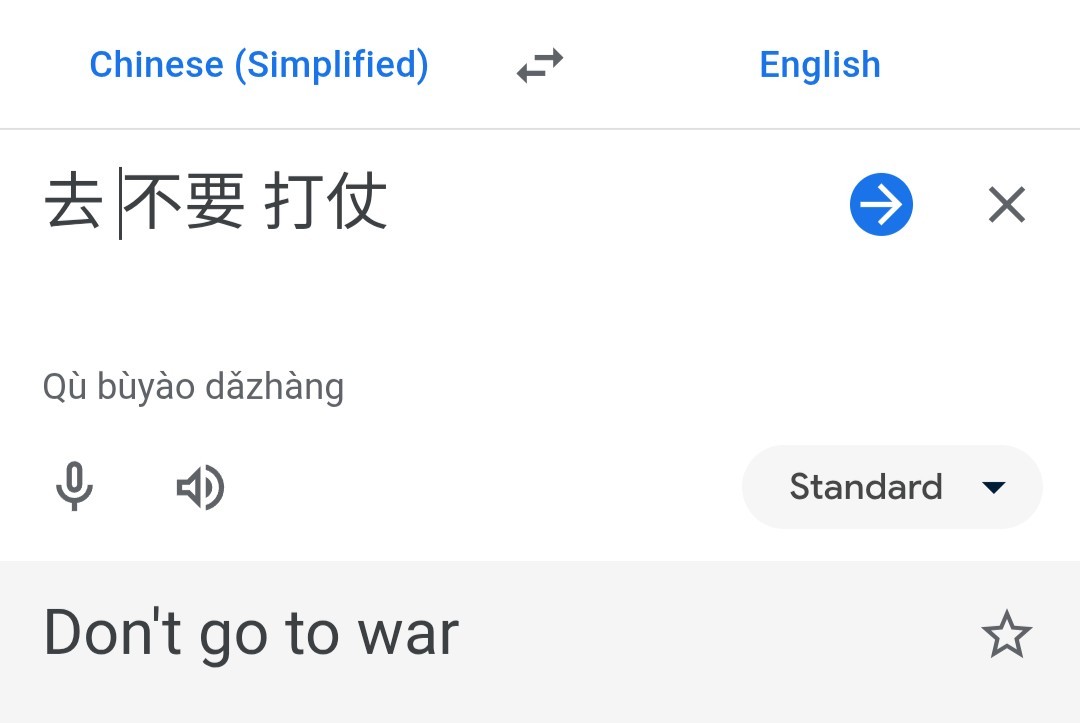
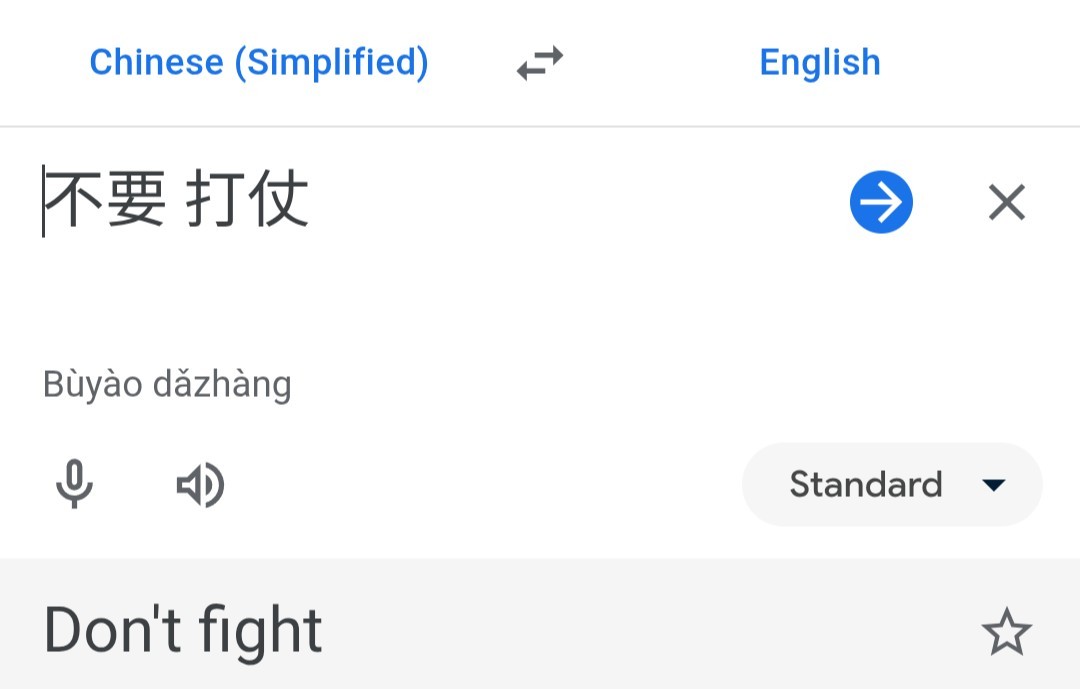
Haha, no worries! I was only asking for my personal education, not to correct you, sorry!
No stress. I was being facetious. I do not have “deep knowledge”
Both are valid, but the version with 去 has a subtle meaning of future tense and is usually what’s used for parents’ commands. 不要打仗 means don’t fight in general.
I see, thank you :) And if I may, wouldn’t 别去打仗 be preferred over 不要去打仗, then ? I was told Chinese prefer using pairs as it feels more balanced / looks better.
I would say both are acceptable. 别去 sounds more colloquial to me.