
Blåhaj Lemmy
  • Communities
  • Create Post
  • Create Community
  • heart
    Support Lemmy
  • search
    Search
  • Login
  • Sign Up
ZeroCool@beehaw.org to Science@beehaw.org · 2 years ago

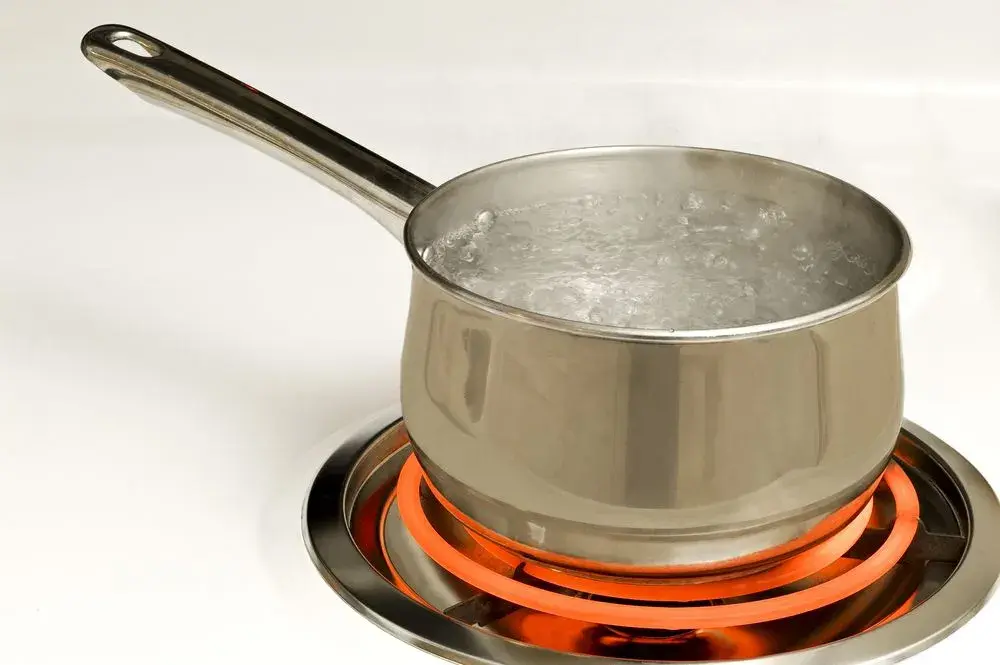
Boiling tap water can remove 90 percent of microplastics

www.livescience.com

external-link
message-square
34
link
fedilink
142
external-link

Boiling tap water can remove 90 percent of microplastics

www.livescience.com

ZeroCool@beehaw.org to Science@beehaw.org · 2 years ago
message-square
34
link
fedilink
Tiny plastic particles float inside tap water, and it's still unclear how they impact our health. But boiling the water for 5 minutes could remove most of them, a new study finds. most of them
alert-triangle
You must log in or # to comment.
  • Kstile@midwest.social
    link
    fedilink
    arrow-up
    67
    ·
    2 years ago

    Somehow, it feels worse if it is an aerosol.

    • frog 🐸@beehaw.org
      link
      fedilink
      English
      arrow-up
      85
      ·
      2 years ago

      I read the article. Apparently it only really works with hard water - that’s water with a high concentration of calcium carbonate. At high temperatures, the calcium carbonate becomes a solid, trapping the microplastics inside it, which is then removed from the water with a regular filter.

  • Chris Remington@beehaw.org
    link
    fedilink
    arrow-up
    19
    ·
    2 years ago

    Luckily I have well water…probably some of the cleanest water on Earth…I’ve tested it several times with kits.

    • Kalkaline @leminal.space
      link
      fedilink
      arrow-up
      22
      ·
      2 years ago

      For now.

      • seathru@lemmy.sdf.org
        link
        fedilink
        English
        arrow-up
        19
        ·
        2 years ago

        At least until the fracking crews come.

      • Chris Remington@beehaw.org
        link
        fedilink
        arrow-up
        11
        ·
        2 years ago

        Probably for a very long time…we live in a very remote area…in the wilderness of Maine…our county has never allowed commercial development…the only things here are camps/cabins/homes.

        • andrai@feddit.de
          link
          fedilink
          arrow-up
          20
          ·
          2 years ago

          There is microplastic in Antarctica. Unless your well feeds on an ancient aquifer instead of groundwater it will still be contaminated.

        • Treevan@aussie.zone
          link
          fedilink
          English
          arrow-up
          16
          ·
          edit-2
          2 years ago

          deleted by creator

        • QualifiedKitten@kbin.social
          link
          fedilink
          arrow-up
          7
          ·
          2 years ago

          I’m pretty sure microplastics have even been detected in rainwater.

        • Shdwdrgn@mander.xyz
          link
          fedilink
          English
          arrow-up
          4
          ·
          2 years ago

          But what about the counties upstream of you?

          • Chris Remington@beehaw.org
            link
            fedilink
            arrow-up
            3
            ·
            2 years ago

            I don’t believe that’s how aquifers work.

          • chaogomu@kbin.social
            link
            fedilink
            arrow-up
            2
            ·
            2 years ago

            Maine doesn’t really have anyone “upstream”.

        • melroy@kbin.melroy.org
          link
          fedilink
          arrow-up
          3
          ·
          2 years ago

          No Washington, D.C. anymore?

          • Chris Remington@beehaw.org
            link
            fedilink
            arrow-up
            2
            ·
            2 years ago

            ???

            • melroy@kbin.melroy.org
              link
              fedilink
              arrow-up
              2
              ·
              2 years ago

              ow never mind haha. I thought you lived there in the past. lol

              • Chris Remington@beehaw.org
                link
                fedilink
                arrow-up
                2
                ·
                2 years ago

                No worries.

        • FunkyMonk@kbin.social
          link
          fedilink
          arrow-up
          1
          ·
          2 years ago

          for… now.

    • P1r4nha@feddit.de
      link
      fedilink
      arrow-up
      17
      ·
      2 years ago

      You tested it for microplastics? They’re everywhere. Even on top of mountains

      • stembolts@programming.dev
        link
        fedilink
        arrow-up
        10
        ·
        2 years ago

        The Marianna Trench contains microplastics. (not a meme)

        The eggs of all newly born children contain microplastics. (not a meme)

        But this person’s water-well. Free and clear. I think the key is this their well is outside of the environment. (meme)

  • KyuubiNoKitsune
    link
    fedilink
    arrow-up
    17
    ·
    2 years ago

    These fucking clickbait titles.

    It only really works with hard water, otherwise you’d have to add calcium to the water before boiling it, and they only tested it with something like 3 different plastics, and they’re the most benign and least reactive ones.

    This is not a magical solution to clean any water you boil.

    • CanadaPlus@lemmy.sdf.org
      link
      fedilink
      arrow-up
      4
      ·
      2 years ago

      I was about to say. The headline sounds like the equivalent of removing mud from water by boiling it.

      Removing fine particles by aggregating them isn’t a brand new concept either, for what it’s worth.

    • Mkengine@feddit.de
      link
      fedilink
      arrow-up
      4
      ·
      2 years ago

      Could instead reverse osmosis remove those particles and be used as consumer products?

      • KyuubiNoKitsune
        link
        fedilink
        arrow-up
        3
        ·
        2 years ago

        Yes to the first, as for the second, who knows, but most likely not, as it’ll be mixed plastics and you can’t just mix them all together and make something out of them

  • fine_sandy_bottom@discuss.tchncs.deBanned
    link
    fedilink
    arrow-up
    9
    ·
    2 years ago

    Microplastics are tiny pieces of plastic debris measuring less than 0.2 inches (5 millimeters) long,

    That can’t be right. There sure ain’t 5mm pieces of plastic in my drinking water. 0.05mm would be hard to believe.

    • Inflo@sopuli.xyz
      link
      fedilink
      suomi
      arrow-up
      2
      ·
      2 years ago

      Not sure that’s correct, but 5 mm being the upper cap doesn’t mean they’re that long.

      • fine_sandy_bottom@discuss.tchncs.deBanned
        link
        fedilink
        arrow-up
        2
        ·
        2 years ago

        I guess the author has just googled “define microplastics”… but when we think about microplastics in our drinking water we’re not thinking about 5mm pieces of plastic.

        A consumer grade filter will remove things larger than 0.0005mm.

    • B0rax@feddit.de
      link
      fedilink
      arrow-up
      1
      ·
      2 years ago

      Sadly, that is the definition of microplastics. I’m not sure why a 5mm piece is considered „micro“

  • Seraph@kbin.social
    link
    fedilink
    arrow-up
    7
    ·
    edit-2
    2 years ago

    Disturbing that micro plastics evaporate!

    So if we just boil the ocean…

    • BolexForSoup@kbin.social
      link
      fedilink
      arrow-up
      13
      ·
      2 years ago

      It doesn’t. Please read the article.

    • DarkGamer@kbin.socialBanned
      link
      fedilink
      arrow-up
      6
      ·
      2 years ago

      The oil industry is doing all they can!

    • P1r4nha@feddit.de
      link
      fedilink
      arrow-up
      3
      ·
      2 years ago

      Well, not boiling, but we do heat it up

    • k_rol@lemmy.ca
      link
      fedilink
      arrow-up
      1
      ·
      2 years ago

      It bonds with calcium but then they don’t say why it’s not an issue anymore. Does it become a super stable particle? I don’t fully get it.

      • fine_sandy_bottom@discuss.tchncs.deBanned
        link
        fedilink
        arrow-up
        2
        ·
        2 years ago

        They say filter out the calcium

  • Hello_there@kbin.social
    link
    fedilink
    arrow-up
    3
    ·
    2 years ago

    There’s going to be some people that are going to start boiling all of their water after reading this article

    • Pantherina@feddit.de
      link
      fedilink
      arrow-up
      1
      ·
      2 years ago

      Omg yes. Please dont, people.

Science@beehaw.org

science@beehaw.org

Subscribe from Remote Instance

Create a post
You are not logged in. However you can subscribe from another Fediverse account, for example Lemmy or Mastodon. To do this, paste the following into the search field of your instance: !science@beehaw.org

Studies, research findings, and interesting tidbits from the ever-expanding scientific world.

Subcommunities on Beehaw:

  • Space

Be sure to also check out these other Fediverse science communities:

  • https://lemmy.ml/c/science
  • https://mander.xyz/c/science

This community’s icon was made by Aaron Schneider, under the CC-BY-NC-SA 4.0 license.

Visibility: Public
globe

This community can be federated to other instances and be posted/commented in by their users.

  • 11 users / day
  • 74 users / week
  • 392 users / month
  • 1.39K users / 6 months
  • 245 local subscribers
  • 15K subscribers
  • 1.15K Posts
  • 5.19K Comments
  • Modlog
  • mods:
  • alyaza [they/she]@beehaw.org
  • Gaywallet (they/it)@beehaw.org
  • Chris Remington@beehaw.org
  • UI: 0.19.13
  • BE: 0.19.13-modified
  • Modlog
  • Legal
  • Instances
  • Docs
  • Code
  • join-lemmy.org