• 115 Posts
  • 207 Comments
Joined 2 years ago
cake
Cake day: February 3rd, 2024

help-circle
  • Nope. Further from the host star than Venus from Sol, and that star is far less luminous to begin with. (Source)

    The amount of CO2 or any other plausible greenhouse gas you’d need to pump a place like that up to lead-melting temperatures means you’d need, what, two planets’ worth of available volatiles? You’d probably also need a seriously disturbed spin for that, like Venus does. I think we can safely start with the assumption that this place (if we can confirm it’s real) is pretty cold.


  • Well. This is quite a pearl.

    I don’t have time to read a 16-page paper in detail, but I did want to know how the host star compares to everyone’s favourite local solitary K-type dwarf, Epsilon Eridani. It’s slightly less massive (~0.7 solar mass versus 0.8 for ε Eri) and quite a bit less bright (difference of about 0.1 solar luminosity), but I especially wanted to know about the age of the star. ε Eri is quite young and frothy, but the investigators here infer from the star’s motion that it belongs to the thin disk, up to a whopping 10 billion years old.

    So we are definitely not talking about an ε Eri-type system. So that should be mean no dust disks, no crazy activity from the star, and no newish planets still carving out their places through the system.

    You’ve really got to wonder about such an old planet, however cold and quiescent it may be. The potential paths for climatic evolution on such a world boggle the mind, however cold it is. You could get an episodically or formerly active world like Mars, a beautifully unstable oscillatory world like Earth, or something completely different. Assuming any atmosphere, of course (safe assumption?). And that’s without considering whether there are any other planets in the system.

    I really wouldn’t spend too much time thinking about this candidate detection, as we have literally seen just the one transit, and we will need to observe this fellow for a while to confirm the discovery, learn about other planets in the system, and so on. The investigators themselves note that the transit was shallow (meaning difficult to detect), but the good news is that the host star is fairly bright, well within reach of amateur equipment. I wonder if citizen scientists will be able to follow the transits.

    Exciting times.


  • Excellent, very detailed episode by Steve Ruff (Mars Guy). I wish we had more access to the RP visualization tools (used by the rover drivers) that are shown off in this video.

    I am however surprised that JPL allowed this use of the AI in the middle of a ripple field (you may wish to view a recent drive map to see what I mean - the AI drove on sols 1707 and 1709). The drive outcomes were good, and apparently the RPs are enthusiastic about the tool, but megaripples are a clear drive hazard for wheeled vehicles. I guess if they were going to run this experiment, they would do it when the rover was making moves purely for traversal to the next target-rich area, and not on science-oriented drives, like the last two.

    … Of course this means that we’re now allowing AI to drive a state-of-the-art, nuclear-powered, laser-equipped planetary vehicle which is hunting for any and all signs of life in order to… identify them. I am of course terrified totally unconcerned.


  • photos of people getting arrested and harassed, possibly the worst moments of their life sold for profit

    I was in full agreement with your entire comment until I read this.

    Tell us - how is the photographer supposed to support himself in this work if not via his images? Do you suppose this person is making vast wealth from this? You yourself acknowledge the danger of documenting what is going on in Minneapolis. Shouldn’t we be encouraging people in this - or at the least, not work to discourage it? By this logic, filmmakers who make documentaries about the victims of war shouldn’t be able to make a wage from their work, either. How about whistleblowers who expose abuse from within, are they allowed to make money from writing books about their experience? If you can provide me with evidence that this kind of photojournalism is leading to vast and exploitative profit-making schemes, I’ll reconsider your argument, but short of that…

    If you want to talk about the worst moments of a subject’s life, consider Phan Thi Kim Phúc. At the age of 9, her village was hit by freaking napalm, and she was severely burned - her clothes literally burned away, and she was photographed running naked from the smoking ruins of her village. This image won the Pulitzer Prize, which undoubtedly aided the photographer in his career… and the victim herself hated the photo at first. I strongly urge you to read the article, however, because it shows how her thinking on this subject evolved.

    The important thing is that these images are being broadly disseminated. And you don’t even have to pay to see them, or form your own opinion on them. What more can we ask for?


  • Ingenuity is grounded, yes. The drone was still alive, however, when Percy was last in contact. It was still gathering onboard engineering data at that time, which would prove useful (even to the scientists) if we can retrieve it at a later date.

    We won’t know for certain if “Ginny” has survived until we get proximity and line-of-sight communication between rover and 'copter again. That won’t be possible until the rover returns to the interior of Jezero Crater, which won’t happen for a while.

    Until then, I’m allowed to dream about Ingenuity bearing up down there in Neretva Vallis, where a muddy river once flowed.


  • As of this latest drive, Perseverance has left the area which was originally mapped in detail for this mission (I have highlighted the quadrangles visited by Percy in red below):

    The rover is now south of “Forlandet”, one of the highlighted quadrangles at the far left of the map. (We landed in “Canyon de Chelly”, at right-centre, on the crater floor).

    Obviously, there has been further geologic mapping of the terrain along Percy’s intended path - no surface mission has ever “roved blind”, even from the days of Apollo - but, to my knowledge, the mission has not shared any of the newer maps in a format accessible to a general audience (there have been a couple of publications in the last year or so, but these are strictly for geologists and not easily digestible). In particular, I cannot find any new information on the quadrangles that we are now roving or soon due to visit - not even their names.

    How about it, NASA? JPL? We are aware of the savagery of the funding cuts under the current administration, and their effects on the actual people who make these missions happen. This comment is by no means intended as a complaint, but an acknowledgment of the importance of what you do - this whole community and the broadly positive attitude toward these missions that we readily see online is proof. Especially given that there are no new science missions, like sample return or future rovers, on the books…


  • This is the longest drive Percy has made in a while (about 100 sols) and one of the longest of 2025, as we transition toward the next area of investigation. I anticipate another long drive in the next sol or two, as the current location is rather windswept and target-poor, and the nominal plan has Percy moving toward some new outcrops to the south.

    The Vernodden slope we just departed (see the map above) was investigated extensively, but we only made one sampling attempt there, which was unsuccessful. The science team is being extremely selective with sampling operations now, given that we only have 8 sample tubes remaining, so any future sampling attempts will indicate a very high science value. The map below shows the nominal future path that the mission laid out about a year ago (which I’ve updated with some landmarks - current location marked with a cross):

    The whole traverse from the rim summit to Vernodden - hardly a huge expanse - has taken 320 sols, so Percy has a long way to go before reaching Singing Canyon!


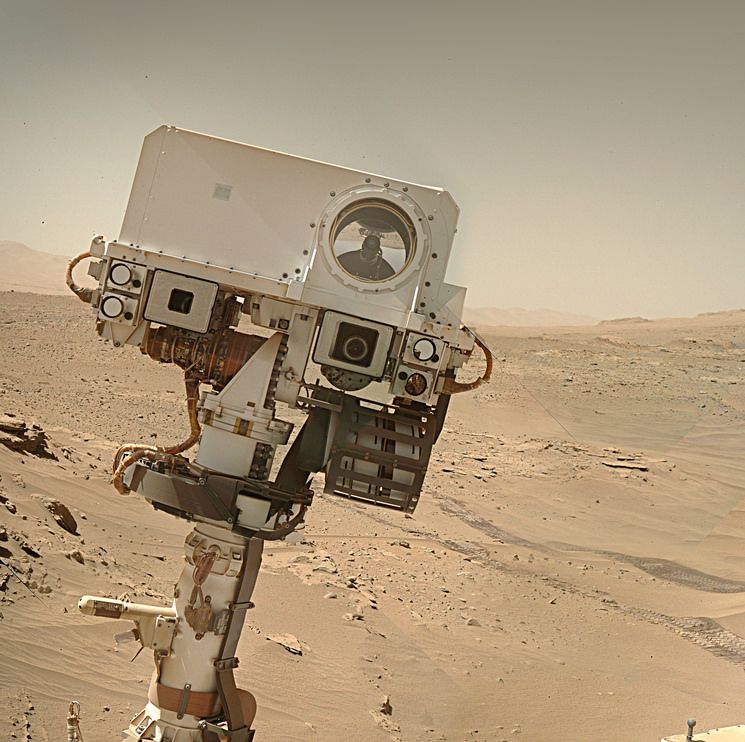
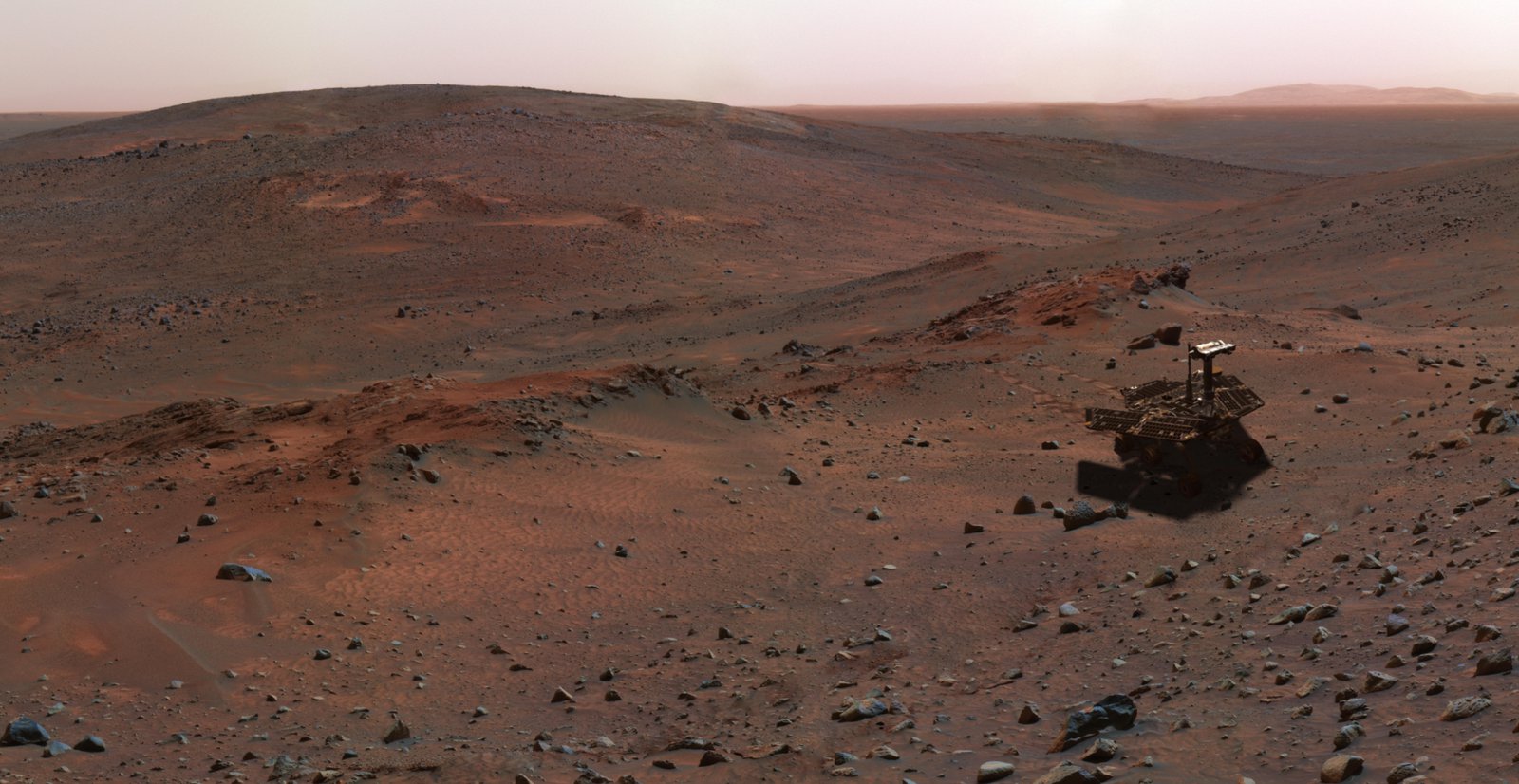
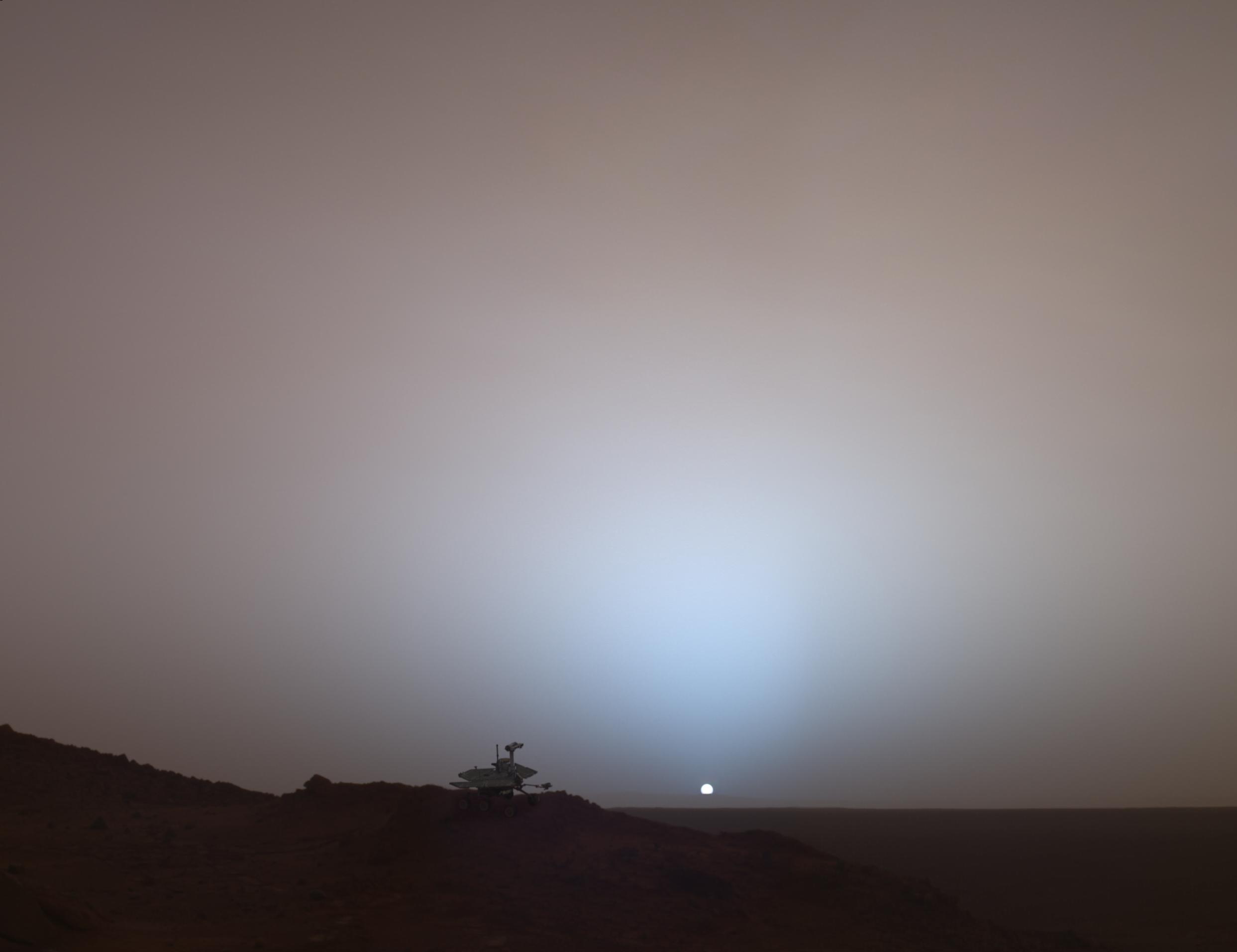
  • I want to see astronauts on Mars as much as anyone. That being said, I think we can all see that remotely operated rovers have their place, and they will even after humans visit. It’s a big planet, after all. And they’ve taught us so much by “living” on Mars for years and years, which the first humans to touch down won’t do. And that’s before you consider how important Percy’s samples are. Beyond all that, though, it’s easy to see from images like this why we’re so attached to our rovers:

    I wonder if the people who want to defund these missions realize that they’re personally less popular and lovable than these robots…


  • Everyone in this thread is approaching the question from the perspective of the passive resident role, and not the traveling science minstrel role.

    Given that I am definitely more inclined toward the latter - which apparently makes me a tiny minority, even in this thread - I feel confident saying that I would have far more to fear from all of you than the reverse.

    You may all point and laugh now.


  • knock, knock

    I’m not a serial killer or a vampire, and I will happily discuss Venus with you. We can even do it at a nice, safe distance! I’ll apologize now if that doesn’t advance your fiction, or any erotic fantasies of frustrated vampires you may have.

    I really want to build a set-up that can properly observe the planet deep into twilight. I’ve read that twilight is the time when you can observe the almost-legendary “ashen light”. Given recent discoveries around a very narrow atmospheric window that lets you just sort of see the surface, in a super-blurry way, I’m wondering if these two phenomena are related. Given the Trump antipathy to planetary science, and Venus exploration in particular, I would find this pretty satisfying.

    … unless you were referring to Aphrodite, and not the planet.


  • Fast forward to 2025, and we take it for granted that we’re roving Mars, covering the kind of scientifically compelling terrain that Carl could only dream about.

    (My emphasis added)

    I certainly hope that’s not true, because Mars exploration - by the US - is under serious threat.

    Now after five rovers and a helicopter, there’s no current plan for any more.

    This does ignore the European plan to launch the full-sized ExoMars “Rosalind Franklin” rover in 2028, but I can’t disagree with Mars Guy too loudly here. Aside from the small but neat EscaPADE mission that NASA plans to launch soon (two orbiters, no lander, no rover), planned science missions to the surface are non-existent for years to come.

    Unless China does their sample return mission later this decade, that is…