- cross-posted to:
- ecosocial@news.abolish.capital
- cross-posted to:
- ecosocial@news.abolish.capital
At the same time, as the AC became ubiquitous in America, “many architects stopped designing buildings for their specific context,” said Sonia Chao, associate dean of architecture at the University of Miami and author of Calibrating Coastal Resilience. “What we have today are buildings in South Florida that look a lot like the buildings being built in California or Arizona,” or more temperate climates, when in fact “we really shouldn’t be building in the same ways.”
Most homes in South Florida once sat atop crawl spaces that protected them against floodwaters and let in a breeze to naturally cool the rooms above, said Chao. But many local buildings are now built directly atop concrete, meaning that “as the earth itself gets warmer,” the homes above absorb the heat too.
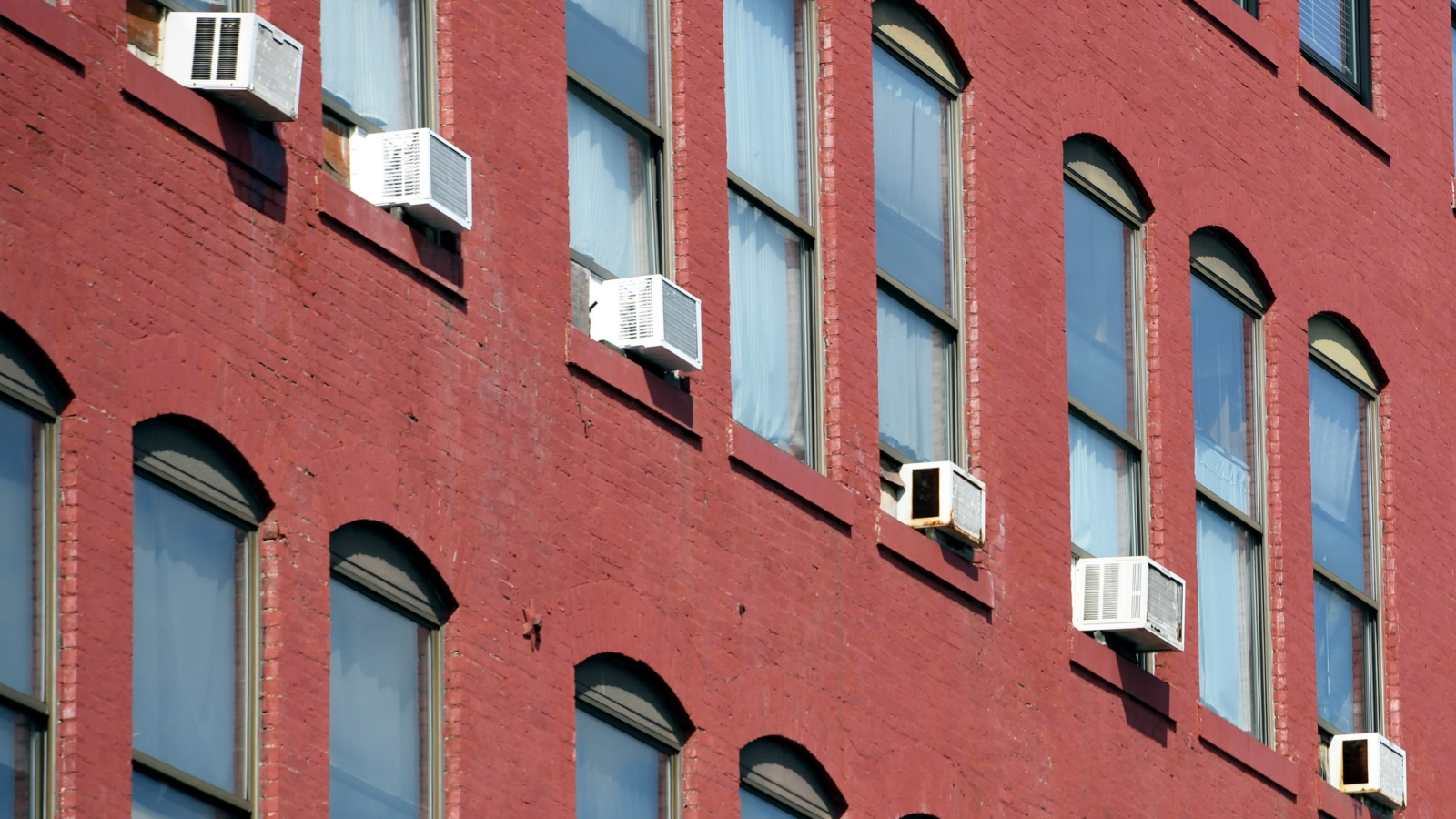
Of course, if you blast your AC high enough, you probably won’t feel it. And, for decades, that gave American developers tacit permission to pare down the elements like thick masonry, high ceilings, shaded porches, and window shutters that once naturally kept us cool in favor of cheap drywall and easier-to-construct boxy floor plans that helped them cram sprawling tracts of readymade starter homes across suddenly bustling desert cities such as Phoenix and Albuquerque. They cleared trees and poured asphalt, churning out decades’ worth of leaky, heat-absorbent neighborhoods. But it didn’t matter — so long as the AC kept running.
You must log in or # to comment.
Build it partially underground - earth sheltered building. ex. underground basement. Use good thermal insulation materials.
Aren’t passive homes objectively the best option? Not a claim (I don’t know shit about this)
We really need more Earthships
Underground, the main floor should be under where most homes consider the basement
Dig. 6000 acre storage facility here stays 70 year round.
that is precisely what a mole would say…

The mole on your face speaks to you?!?
Is this a quote from a source?
See also https://en.wikipedia.org/wiki/Passive_solar_building_design
Yes my bad I forgot link.
Those fake window shutters look so weird
I have a south Florida home. Half is build on slab, half over a crawlspace. The crawlspace half is easier to cool with ac (which the home predates) but has annoying humidity problems that are hard to fix with ac (we had to seal and ventilate it with inside air, which eliminates its main utility). So while I don’t disagree with the overall point of the article, that particular example isn’t really a good one.
return to rammed earth
Adobe makes for good insulation. It delays heat transfer so the heat during the day is held, keeping it cool, and then slowly released during the night, keeping it warm. Air conditioning without emissions.
Sprawl can screw this up though - in Arizona, adobe used to be great. But now in Phoenix the large amounts of concrete mean the desert doesn’t cool off at night, and so you don’t get any time to release.
Basically people either shouldn’t live in the desert, shouldn’t pour large amounts of concrete, or need to unify cooling a la Arcosanti.