


1·
5 hours agoA psychologist would have a field day analysing Malinauskas’ performance. It’s DOCTOR Abdel-Fattah, Peter.
Does associating with Zionists rot the brain?
https://www.abc.net.au/news/2026-01-14/premier-peter-malinauskas-responds-to-criticism-/106229798
@palestine@lemmy.ml @palestine@fedibird.com
#Meanjin
#Adelaide
#Bendigo
#AusPol
#Zionism
#censorship
#Palestine
#Israel

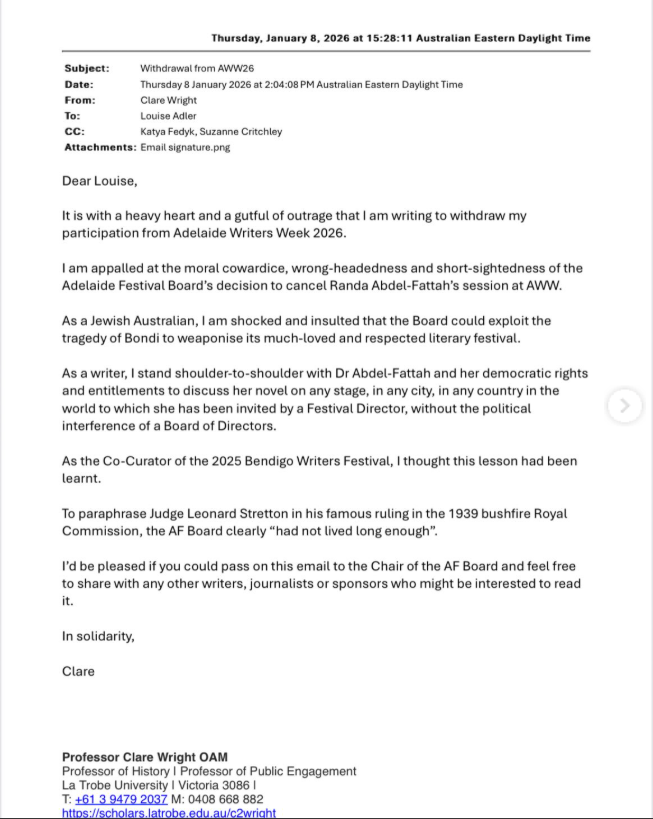
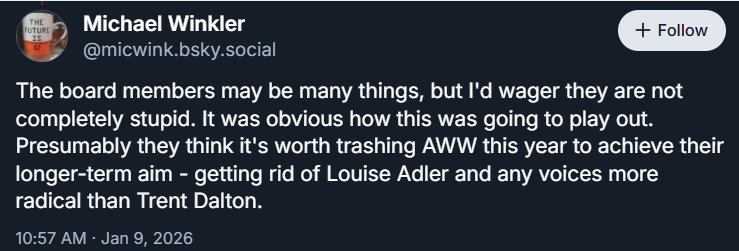
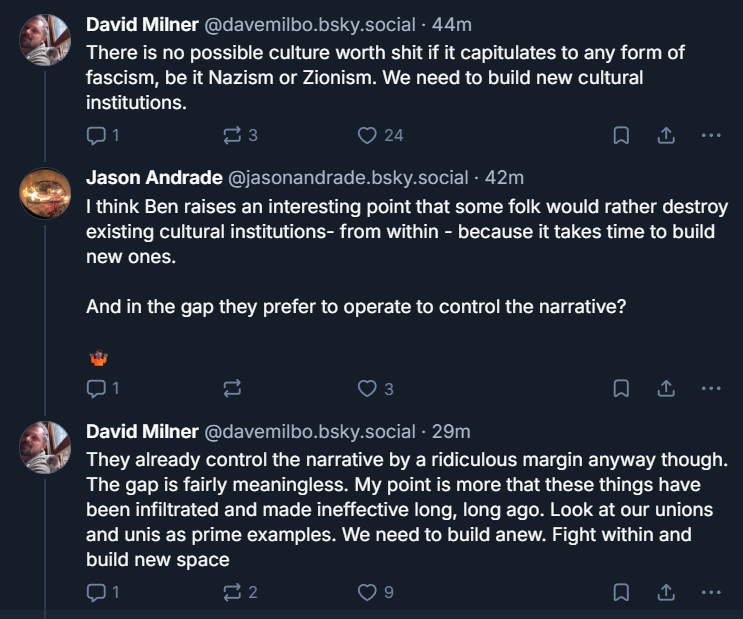
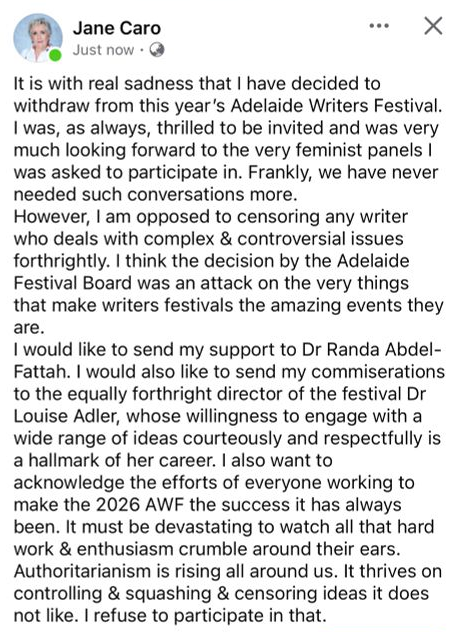
![Ben Eltham @beneltham.bsky.social Bendigo Writers Festival, Meanjin, now Adelaide Writers … powerful vested interests would rather destroy the cultural institutions they are supposedly responsible for than allow certain voices to be heard [quoted post Nick Feik @nickfeik.bsky.social · 3h Adelaide Festival board facing a stark choice: Are they willing to sacrifice the entire festival to prevent a single Palestinian-Australian author from speaking? end quote] 12:41 PM · Jan 9, 2026](https://cdn.theblower.au/media_attachments/files/115/862/941/326/898/878/original/ee83b06aee314452.png)
![THE AUSTRALIAN ‘Could barely see it’: Jewish community not consulted on New Year’s Eve menorah symbol Jewish musician Ben Adler, part of the push for an ‘unequivocally’ Jewish symbol for Sydney's NYE celebrations, said the menorah beamed on to the Harbour Bridge was barely visible. THOMAS HENRY 2 min read January 2, 2026 - 10:01AM [image of menorah, projected on pylon of Sydney Harbour Bridge]](https://cdn.theblower.au/media_attachments/files/115/841/043/514/390/193/original/941954255acd3a56.png)


@ewen
Just change ‘Adelaide’ to ‘Moscow-on-Torrens’ and be done with it.
https://www.abc.net.au/news/2026-01-14/analysis-adelaide-writers-week-randa-abdel-fattah-controversy/106223542
@palestine@fedibird.com @palestine@lemmy.ml