
2·
4 days agoAccording to this report, Godzilla Minus Zero will be the first Japanese movie to meet the standard in North America required for release as ‘filmed in IMAX.’

According to this report, Godzilla Minus Zero will be the first Japanese movie to meet the standard in North America required for release as ‘filmed in IMAX.’
Minus Zero is later in time than Minus One.
Exasperatingly literal.
I’m hoping to get to an IMAX version.

Really unfortunate that trawl fishing damaged the wreck — but also incredible that the ship was still in use in the early 1960s.
Do you mean this 2025 Korean movie?
I haven’t seen that one but it sounds interesting. Thanks for the recommendation!
My sense is that North Americans just aren’t aware of the existence of high concept or well resourced productions coming out from Asia. China, Korea and Japan have large television and film production industries and the vfx specialists to make shows and films of similar or superior production quality. We’re just conditioned to think that’s Hollywood’s specialty.
The creative choices will be different and the narratives will reflect a difference in culture — and constraints of national censorship in the case of China — but there’s as wide a range of styles and types of stories.
Unfortunately, most of us only have access to the slice of Asian entertainment that Netflix choses to license. Disney+ partners with Chinese producers but then only offers the shows in SE Asia outside China rather than bringing them to Hulu. Amazon Prime was licensing Asian shows a few years ago but seems to have pulled back. Some shows are available to watch with ads on official sites on YouTube.
Asian streamers are available for subscription in North America but the majority of the content licensed at this point is romances and Idol dramas, with the occasional scifi show or thriller tossed in.
Definitely can appreciate that it’s fairly manic, and not for everyone. That’s why it has the summer movie vibe for me.
Also Dylan Wang He Di is often in roles where he’s a bit of an offbeat heroic character in dramas and films with a lot of action.
You might like Mobius better as scifi thriller or Reset if Netflix still offers it in your region.
But slower paced stuff like Interstellar is almost a different genre. Three Body Problem may be more your thing.

Yah, I was more ready to let go of new Star Trek by the time Enterprise was canceled — but that show finally felt like it was all coming together in season four so it was frustrating that it didn’t get a full run.
The miasma of sadness I feel knowing that the SFA and SNW sets have been ripped down in Toronto and Mississauga is making it hard for me to really get excited and embrace the marketing for SNW season four.
I know I will be watching with my spouse and engaging here, but it’s very really not a great feeling given I was around for TOS’ cancellation, TAS’ cancellation, Enterprise’s cancellation and now the closing of this era.
Would be really interested to hear what you think of it.
I would watch the show Mobius first.
It is however an adaptation from the novel “Ni Shi Zhen Cha Zu” (逆时侦查组) by Zhang Xiao Mao.
Mainland Chinese webnovels are often available in English translation but the quality of translation varies widely. Some of the translations are just fan translations, likely just cleaned up AI versions.
Here’s an English translation that I found referenced on MDL:
https://webnovel.leonparenzo.com/story/inverse-time-investigation-team-mobius/
Here’s the drama Mobius for the drama on My Drama List (MDL), a popular database for Asian dramas and films.
As I noted to someone else, Mobius is a current day timey-wimey scifi action thriller available on Netflix. I thought it was very well done.
It’s about a police detective sergeant who possesses the ability to relive some (unpredictably random) days and uses it in solving crimes.
It takes place in Macau, so there’s some Cantonese and English mixed in with the Mandarin although the lead actor Bai Jingting is ethnically Manchu and from Beijing.
Bai Jingting has done quite a few scifi dramas recently. Another timey-wimey one Reset takes place mainly in the Chinese Republican era — with all the angsty spy-stuff and factional twists of that era — and was also on Netflix. (It’s no longer available in Canada but may still be on in the USA.)
Sometimes there’s very consistent tone — Mobius is a good example of tight and consistent tone.
But many in other cases there can be jarring juxtapositions in tone.
Shows that start out as slapstick or Lucille Ball type comedies may become very dark and serious in the third quarter.
Sometimes a comedy is defined only by the protagonists not dying in the end and a ‘happily ever after outcome.’ More in the vein of an Ancient Greek definition of comedy.
And more like Shakespeare’s theatre, there can be moments of outright comic relief in the midst of 40 episode nonstop tragedy.
Then, there are the comic non sequitur comments — especially about food preferences— in the middle of fight scenes that originated in Hong Kong action movies (Per Aspera Ad Astra references those).
I’d recommend that you also try the current day action timey-wimey sci-fi thriller Mobius also available on Netflix for another one to get you into Chinese dramas.
Bai Jingting who stars in Mobius is another strong and popular male lead who is doing a significant number of high concept sci-fi shows. He’s also got a superhero parody comedy movie Keep Real coming out in theatres in China this summer. No news on whether an international streamer will pick that one up.
Glad to be helpful.
There’s a lot of good stuff coming out of Mainland China in recent years but it’s often marketed in a way that makes it really difficult to know what a show or movie actually is about.
Even opening episodes can be tonally radically different than the rest of a series and the trailers and synopses are often simply deceiving. Tonal whiplash is part of the form.
Not what you fear at all.
This is definitely a cautionary tale about AI but not a dystopian one.
Thanks to co-mod @ValueSubtracted@startrek.website for catching this and getting a post up.
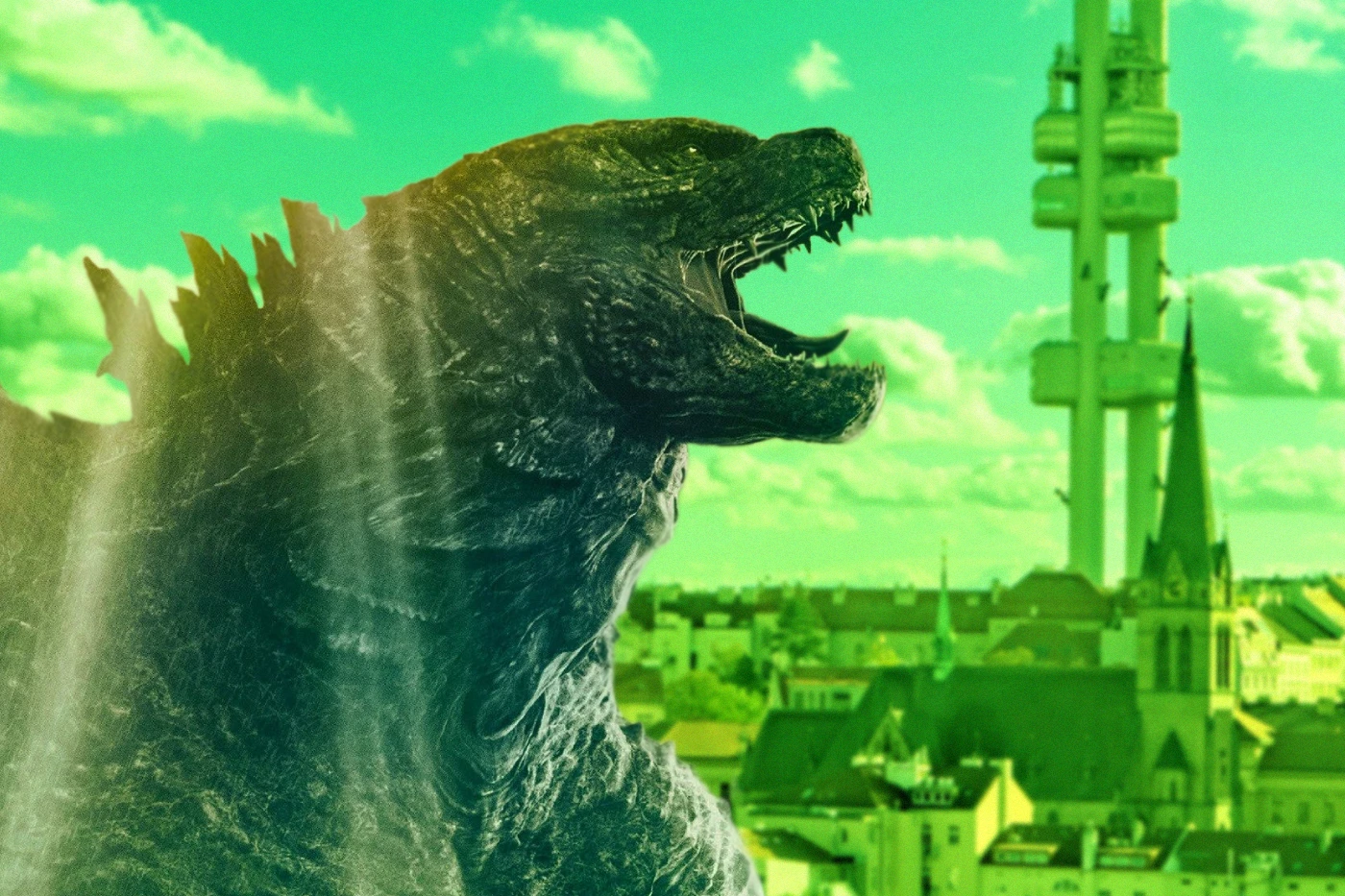
This announcement is for additional casting for the Cold War show focused on young Lee Shaw (played by Wyatt Russell) that was first announced in November and heavily promoted during the media tour for the second season of Monarch: Legacy of Monsters.
Principle production should be starting off now in Australia and other South Pacific and SE Asian locations. I have to wonder if they won’t be returning to Canada for the Russian Soviet locations as they did for Monarch.
It appears to be a fairly strong ensemble. Wyatt Russell takes on principal character, chef de compagnie responsibility for the first time with this show, but considering his growing role in Marvel cinematic features, it’s timely.
From the creators:
the series will follow the story of Colonel Lee Shaw (Russell), an American operative who, in 1984, went on a secret mission behind enemy lines in an attempt to stop the Soviets from unleashing a horrific new Titan big enough to destroy the U.S. and turn the tide of the Cold War.
Fantastic to hear. Glad you can join in.
We’ll be watching S1 E3&4 this Saturday, June 20th between 3:00 and 5:00 pm EDT.
Paywalled for me in Canada.









Unfortunately, that Instagram post seems unavailable now.
In any event, I would be happy to see both James Frain back as Sarek and Mia Kirshner as Amanda Grayson.
I was one of those who really liked their performances as those characters.