

If one upload slows down your internet you probably need a router that has a better packet scheduler. I recommend you look for one that uses FQ-CoDel
…yeah, because THATS what this post is about!
Why not have a fun joke and some education?
I’ll play. Without assuming where anyone is from, I’ll add that the vast majority of US residential Internet connections, especially those in rural areas, are not only slower than they are in much of Europe (for example) but are commonly asymmetrical, too. Meaning even if someone has a gigabit connection, often it’s only 1Gbps in one direction for Americans while the maximum upstream throughput may be closer to 50Mbps. Even a top-of-the-line, 5 figure Cisco or Juniper router can’t do much to improve that situation for the end user when someone starts uploading large video files.
That said, fortunately or unfortunately (as our President says), incest isn’t exclusive to Alabama,
I believe every internet connection in the world is asymmetric. Most people download way more than they upload.
deleted by creator
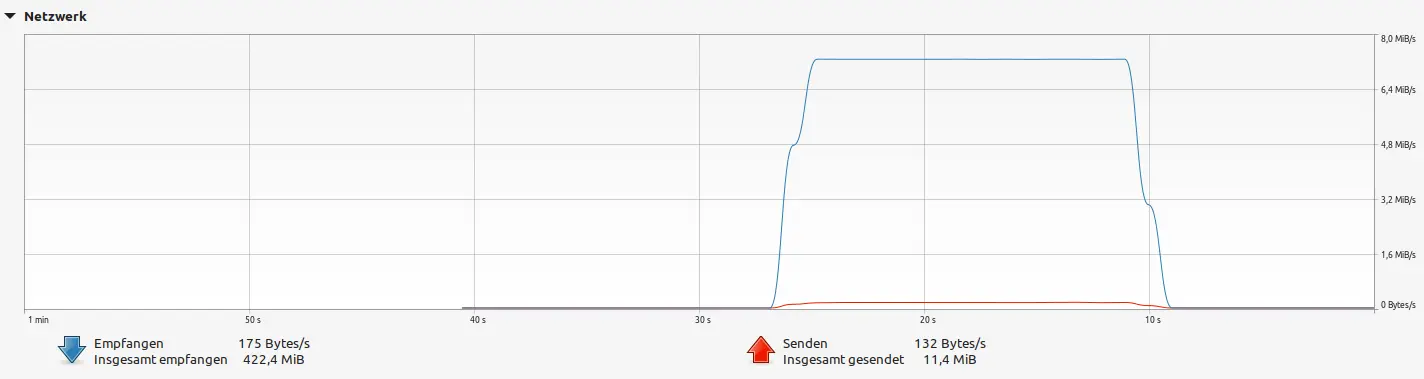
TCP ACK packages are tiny compared to the payload. I’m not sure this is really your issue.
Edit: To prove the point, this is me downloading a large file. The download to upload ratio is about 40:1.
deleted by creator
Yes but my point was that some people don’t even have a choice.
Nope mine’s 1 GB down 1 GB up I’ve checked and it is. True I’ll probably never use the upload capability to anything nothing about maybe 4% of its capacity but that’s why the company can offer 1 gigabit up.
So… we shouldn’t learn about things because the internet in the US sucks?
Tbf it has 2 of 4 panels complaining about slow Internet.
Love lemmy for that though :( Where would i learn about fqcodel if not here.
Does uploading slow down downloading? I thought the two processes were totally decoupled. How does this work?
Yes, it can slow down downloading.
(The explanation below is simplified quite a bit)
When you download the server that is sending you the file doesn’t just dump all the data onto the network in one go. They don’t know how fast you can receive and it’s not like the routers along the way will buffer large amounts of data. It needs to figure out how fast it can send.
So how does it do this? The sender sends a few packets of data and then waits for the receiver to acknowledge reception before it sends more data. Now the acknowledgment message isn’t that big so when downloading the amount of data sent back (uploaded) is just a tiny fraction of the amount downloaded, so that usually doesn’t matter.
The problem occurs when your local network is much faster than your internet upload and your router isn’t smart about which packets to send first. A good router will not allocate all the spots in the outgoing queue to the connection doing the large upload and instead will make sure the connection with smaller amounts of outgoing data will get a fair turn.
If your router isn’t smart like that the ‘data received, please send more’ packets may be delayed because of all the other outgoing packets and thus slow down the download.
If your router’s cpu is locked 100% because of an upload it can’t handle additional download, probably. This could be improved with a more powerful cpu or a more efficient process of sorting out up- and downloads. At least that’s what I got from the original comment. I’m not a networking expert (far from it) so take this with a big grain of salt.
On the ISP end sometimes non symmetrical equipment is used, especially on copper coaxial which are used much like “wired wifi” in that data is transported by encoding it into frequency bands. Each frequency band can only be used up OR down per cable, so ISPs tend to dedicate more frequency bands to the downlink than to the uplink.
And as others mentioned, the commonly used TCP protocol will slowly ramp up bandwidth by having the server send a burst of packets, the client acknowledges, then the server sends more packets faster and the client acknowledges again, and once the client and server starts noticing packet losses it backs down and resend the lost packets a bit slower, until the connection bandwidth is stable. If you fail to send acknowledgements the server will back down on the connection speed even if you’re able to receive at full speed
You’re ignoring the fact that most areas of the US are hamstrung by super shitty asymmetric up/down bandwidths (fuck you very much, Comcast). I have 1.3gbps down… and 30mbps up, per the contract.
Why don’t you switch to a different ISP? Last time I checked I could choose from 13 different ISPs on fiber alone, and that’s in ‘socialist’ Europe. I can’t even dream of how many options someone in ‘free market’US must have.
Regulatory capture means that a shockingly high proportion (I’d be willing to bet it’s a strong majority) of unitedstatesians have precisely one viable option for an ISP with meaningfully high speed.
Source: I’ve been forced to purchase Comcast for the vast majority of my adult life, and I’ve lived in a bunch of different neighborhoods in two major US cities.
FQQDel
This is a very dated meme
It will be slow again when son downloads his sister’s porn. Home sweet Alabaaaama!
Maybe they should invest in a family nas then so they can share is locally
Why bother with all the fancy technology? just leave the door open.
*incest in a nas
*Sweet Home
no, that’d be a copyright infringement
gasp
Not COPYRIGHT INFRINGEMENT!
there has to be faster ways to transfer files through a local network.
Well, he could do the recording so there’s no need to move it anywhere, but I think we’re charting weird waters here…
the weird waters are already drawing the whole situation.
I just want to optimise their IT infrastructure
i don’t think normies out here know how to use p2p or even a simple ftp server. people think of content as the websites they get it from, like the way youtube is synonymous with watching videos over the internet.
Uploading her porn? Gross! To where though? There’s so many places she could upload to, which one? So disgusting!
A fellow adherent of the scientific method, I see
Uploading wouldn’t cause a noticeable slowdown for most internet uses, unless OP was also trying to upload something as well. Most ISPs offer a fraction of the upload speed as download and your average person still doesn’t even notice a slowdown.
It’s a throughput issue not a bandwidth one. Can’t make requests to download if your uplink is fully saturated.
If you’re trying to play a real time online game, you will notice if your upload capacity is hogged elsewhere.
Same with anything using TCP because you need to send packets back.
With cheap routers, bufferbloat is actually more likely to cause a noticeable slowdown with uploading rather than downloading, since your upload is usually much lower it’s much easier to max it out unless you have a powerful router and/or some good QoS rules defined.
Back with old DSL and especially dialup it was a much bigger issue.
As long as she’s a legal adult, good for her. You get that coin, chica.
No, nonono. There is a difference between upstream and downstream. The upload would not make general use noticeably slower.
Wrong, you still need to send traffic to receive it. If upload is bottlenecked your net will feel increasingly sluggish
Well, yea, though that would suggest a very limited bandwidth
Except for “traffic shaping” and other such bullshit that may unnecessarily cause congestion, trying to optimize the shit out of that upload.
You still need to send the acks when downloading. If the upload is saturated then you will still have issues downloading stuff, as either the acks are delayed or dropped.
Good for her!
She also could be downloading porn although I’m pretty sure streaming sites for poem exist
For that matter the son could be uploading or streaming to porn sites